Showing posts with label Night Shift. Show all posts

Thursday, July 26, 2018

Sometimes They Come Back (1991)


We've finally made it to the end of the Night Shift mostly-awful movie marathon! While Sometimes They Come Back wasn't total dreck like Graveyard Shift and its ilk, it fell short of some of the better adaptations such as Cat's Eye. Actually, the original short story was a fair bit better than most of its companions, written around the time Carrie was published, so it straddles King's juvenilia and more professional short work. This probably made it more tempting than the others to get the movie treatment. Unfortunately, the original plan to integrate it into Cat's Eye, something I have a lot of trouble wrapping my brain around, didn't pan out and six years later it ended up on the small screen as its own movie.

The original story is a bit of a puzzler. It starts off fairly heartfelt, about dealing with loss and change and not even all that scary, like King was trying to bust out of the genre. That doesn't last as it becomes clear the old bullies are inexplicably coming back (as they sometimes do) into Jim's new classroom. So much for the non-genre story, but it moved the story more in line to what King does best. Then the story goes completely off the rails, with his wife being killed, Jim doing a deep dive into the occult, and the suffering reader chucking the book in bewilderment.

Needless to say, a straight-up adaptation of the story would be nothing short of box office tragedy, but one way or another, this one was going to get the treatment. The small screen ended up fielding it, resulting in a better-than-average TV movie for the 1990's, but another mediocre attempt overall. First off, the scenery was changed to the Kansas City area, and the town is Jim's old hometown. That way when he experiences the flashbacks everything is conveniently close by. Also, no family (wife or son) were killed in the movie, because it was primetime network television and that's not cool. Finally, the occult element is dialed way back. While there are still demons and afterlife matters, there are no real rituals (like cutting off fingers, etc.) beyond just having to reenact the past murder to push the demons officially into hell. As a quick sidebar here, I get it that "greaser" bullies like to be mean and hurt little kids, but murder? It seems a little casual for these guys.

Out of curiosity I looked at the plots for the two sequels and they are completely bonkers. Both unsurprisingly are straight-to-video gems that have nothing to do with the first movie. Number two is a similar incident, but with way more occult. Not to be outdone, the third takes place in (wait for it) Antarctica....and don't worry, the occult is still there!


Thursday, June 28, 2018

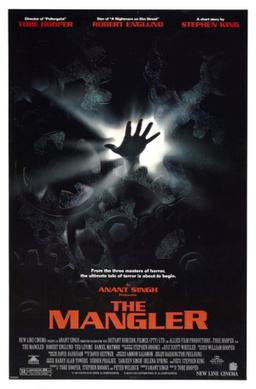
The Mangler (1995)


I wish I could say that we saved the best for last, but if you've read anything here you should know by now that Night Shift is guilty of inflicting the world with some of the worst Stephen King adaptations ever. The Mangler definitely scrapes the bottom, with some out-of-left-field humor being one of the movie's few saving graces. This review will be shorter than most, only because I watched this over a month ago and just couldn't work up the inspiration to give it a thorough recap.

Having watched this on the heels of reading Roadwork, I can only assume Stephen King had some unpleasant experiences with industrial laundry facilities. While in Roadwork, it was just an unpleasant place to work, in this story it is home to a terrifying machine that eats people when properly "woke". But this is no Exorcist knock-off, as John and his occult-knowledgeable brother-in-law discover the hard way; the machine works on antacids! I should say antacids and body-part and virgin sacrifices. Sure, why not.

Like many of the other adaptations from Night Shift, this movie also suffers from trying to pad a substance-lite story. The machine monster is stuffed full of CGI and the blood spray effect is in full use, making the movie's tone more violent and thrilling than the mysterious and lower-key one of the original story. Then again, if you have Tobe Hooper in the director's chair, you're probably expecting something a least a little bit gross.

Needless to say this movie bombed pretty hard and further diminished Tobe Hooper's already-sagging fortunes as a horror-movie icon. Speaking of horror-movie icons, Robert Englund gets top billing in this movie even though he isn't in it a whole lot, although I'll grudgingly admit his portrayal of a disgusting old disabled owner of the Laundry Shop of Horrors is pretty good.

Tuesday, April 3, 2018

Battleground (2006)


One of the quirkier adaptations, as well as one of the last original adaptations from Night Shift, "Battleground" is not a movie, but the pilot episode of the short-lived limited basic cable series Nightmares and Dreamscapes: From the Stories of Stephen King. Anyway, this should not be confused with the story collection of the same name that King published in 1993, even though most of the episodes actually do come from that book.

In both story and movie, "Battleground" is largely a single human character, played here by William Hurt, interacting with no-longer-inanimate objects. While there is some room for dialogue, particularly at the beginning when he carries out his hit on the toy-maker, the entire episode is dialogue-free. This works pretty well for the main section of man-versus-toy soldiers (even though I'd be hollering holy hell at those little green men), but elsewhere it is a little forced.

At times the action seemed a little silly. For example, nobody in his luxury apartment building seemed bothered by the fact he was shooting up his furniture with an assault rifle or wrecking their elevator. However the well-done special effects (under supervision of director Brian Henson....yes of that Henson family) helped to smooth out the instances of the incredulous. Of course, the fun of the story is not knowing what bonus surprises are hiding in the toy solider box. So it is possible that those who never read the original story would be more floored by the outcome than those who are waiting to see what a miniature hydrogen bomb will look like on screen.

Given the mediocre nature of some of the other adaptations from Night Shift, especially the later ones, this was a little breath of fresh air. It is certainly something to look forward to when this project advances thirteen years further in Stephen King's publishing history.

Tuesday, March 13, 2018

Trucks (1997)


Trucks is one of the stragglers in the ten adaptations that come from the Night Shift stories. For reasons that should become abundantly clear as this blog post unfolds, it isn't one that gets shown on TV much anymore. It also is another victim of the "let's try it again" phenomenon of the 1990's and beyond that needlessly dulled movies in the interest of attempting to stay faithful to the original written story (e.g. The Shining, Carrie).

Now I can understand the motivation to update some of the oldest Stephen King movies, be it to modernize them or fix the perceived flaws of the original. However, I'm scratching my head a little over the decision to re-do Maximum Overdrive. It seems like perhaps they wanted to "get back" to the original concept, seeing that they even returned the name of the original short story. Surprise, surprise, though, this version defied the trends of the day and actually wandered further away from the original. In fact, I dare say this was a remake of Maximum Overdrive that gave no consideration to the original story, like they hadn't even read it.

The short story "Trucks" never revealed exactly where the truck stop was situated, while Maximum Overdrive put it in North Carolina (home of most of the Dino-era movies), and this one moved the action out west into some kind of Roswell/Area 51 hybrid area. Conveniently, this accommodates the natural beauty of the Canadian prairie where the movie was shot.

The agony or beauty (you choose) of "Trucks" was that you never know how or why the trucks became sentient and the readers are left with the bleak feeling of a world where humans must now serve their new truck overlords. This would understandably make a terrible movie (or an Oscar winner, depending on the director), so Maximum Overdrive went through the trouble of explaining how the whole situation arose. Since it was a (spoiler alert!) comet, the intrepid band of humans pretty much just had to wait it out and things got back to normal, a fact relegated to a paragraph stapled on to the end of the movie. Clearly, Chris Thomson, director of Trucks and other mid-grade TV projects, felt this was half-measure and laid out possible causes like military projects gone wild and toxic spills, which the humans could fight against and fix.

An interesting difference in Trucks is what is affected by the "sentient truck" bug. Maximum Overdrive used an expansive approach that impacted all kinds of equipment, like electric knives and ATM's, and even sprinklers that have no motor I've ever seen, while regular cars were surprisingly immune. Trucks sticks pretty much to just actual trucks, but doesn't bother to distinguish among trucks. This scene, for which I cannot improve with commentary, says it all:


Other than being kind of boring, the main problem with Trucks, and with most pre-2000 television movies, is the obvious cut corners. Leading man Timothy Busfield probably didn't wreck the budget. But most telling is that a situation where a group of humans are trapped by trucks at a truck stop requires more than three trucks. I never got the feeling they were really trapped. Instead it just felt like the whole crew suffered from bad timing, always venturing out of safety right when a truck happened to be cruising by. Ultimately it is stuff like this that made Trucks not so much a blown opportunity as an unnecessary production. Why mess with "perfection"? 

Thursday, November 9, 2017

Movie: The Lawnmower Man (1992)


Let's be clear right from the get-go that The Lawnmower Man movie has nothing to do with the "Lawnmower Man" short story. This didn't stop them from apply Stephen King's name to the original movie title, in a sad attempt at a cash-grab. Only after a threatened (?) lawsuit did they end up dropping King's name. Since I have shown a great resilience in watching bad movies for the sake of this blog, I figured what the hell, why not watch this one anyway.

Well, this movie is pretty damn awful. I won't quite go to the point of saying this is as bad or worse than Graveyard Shift, but at least that one tried to capture the gist of the short story and primarily failed because the source material was so weak. In all fairness, if they had tried to stick to the original short story here, it probably wouldn't have been any better than this. I mean, was anyone clamoring to read about a naked freak who mowed lawns by eating them and killed all the animals in his path?

In perhaps its only smart move, this movie completely rejects the short story and instead tells a tale of science gone haywire. Pierce Brosnan in pre-007 mode plays Dr. Frankenstein Lawrence Angelo, a frequently-shirtless scientist who somehow invented a way to make people smart a la Flowers for Algernon though the use of virtual reality. Needless to say, a few of the middle steps between "put on VR helmet" and "become smart" are hidden from the viewer. After a monkey goes completely...uh...apeshit...after a little too much time on the VR machine, he does the safe thing and takes advantage of a gardener's assistant who can barely live independently, but is able to build lawnmowers, to take the monkey's place. Predictably, he gets fabulous initial results, but then the Lawnmower Man becomes smarter than him (and apparently more virile) and eventually self-brain-transplants into the machine. While the quasi-government lab in charge of these experiments that never would have passed any unbribed review board is officially horrified by Dr. Angelo's actions, some secret government dude named the Director sanctions it all as a way to, you guessed it, fight better wars. In the end, the Lawnmower Man is able to slip out of not only his flesh body, but also his computer body and infiltrate the "network" (this is before anyone knew what an "Internet" was). Add this to Dr. Angelo finding an unauthorized way to continue his work, and you can already see the plot of the sequel, Bride of Lawnmower Man. Of course I made that title up; they went with Lawnmower Man 2: Beyond Cyberspace (yawn), which from what I can tell had little in common with the original in terms of either plot or cast.

As for the cast, Pierce Brosnan turns in a decent performance, given the material he was working with. His accent kind of falls somewhere in the middle of the North Atlantic, a little British, a little American. Jeff Fahey bugged me through the whole movie as I racked my brain wondering where I remembered him from. I felt kind of stupid because he's been in zillions of movies, but the connection I was grasping for was the TV show Lost, where is in older and grayer, but unmistakably Jeff Fahey, with his unique face and voice. The only other interesting cast note is the appearance of Dean Norris, sixteen years before Breaking Bad, who was bald even back then, and I won't even begin to attempt a rationalization for whatever accent he was employing.

I think the movie probably got a better reception back when it was released because stuff like "virtual reality" was still considered pretty exotic circa 1992. Then again, considering this was released the same year as Terminator 2: Judgement Day, it suffers a lot in the special effects department. Whereas that movie still seems pretty edgy and cool today, this one seems especially corny. The other day I referred to this as "opposite Tron" is that nobody could figure out that movie upon release, but times caught up with what it was trying to depict, whereas Lawnmower Man feels increasing like reading old science fiction where scientists used slide rules to plan trips to Mars.

Wednesday, August 30, 2017

Movie: Cat's Eye (1985)


I exhausted most of my channels for finding free Stephen King movies, and I noticed over a month has slipped by since the last post. So with a newly repositioned router for the best streaming experience possible, I have started rent-to-stream through Amazon. While I can't say I'm too excited about spending any money on some of the dreck produced from Night Shift, I didn't feel too bad about throwing a few bucks out there for the privilege of streaming Cat's Eye for 48 hours.

Cat's Eye is a horror anthology film, a sub-genre that was enjoying a great deal of attention in the 1980's with titles like Nightmares (1983), The Twilight Zone: The Movie (also 1983), and Stephen King's own dream project directed by George Romero, Creepshow (1982), plus dozens of others. Unlike Creepshow, which adapted either brand-new or uncollected story content, Cat's Eye adapts two of the better tales from Night Shift, "Quitters, Inc." and "The Ledge", and packages them with a brand new story, "General", which holds the overall plot framework together. They are brought together through the multi-state misadventures of a cat (later christened "General") who is adapt at riding in trucks, boats, and trains across the Eastern seaboard.

All in all, Cat's Eye was an enjoyable 90 minutes and probably the best adaptation work to come out of Night Shift. It isn't the greatest movie ever and definitely shows its age in places, but perhaps they were smart to stick to turning short stories into short movies. As each story only got half an hour of screen time, the temptation to add a lot of filler was removed. That filler wrecked most of the other movies. On the other hand, the two adapted stories are very faithful to the original works. Neither one feels the need to warp its original plot to satisfy the needs of the anthology film. Normally, when it comes to novel adaptations, a faithful depiction means a more boring presentation, but both were fun and engaging. Neither story's depiction was too far removed from what I had pictured when reading the stories. The only real changes involved the presence of the cat, who obviously wasn't in the original unrelated stories.

The third and final story, "General", wasn't that great, although it seems like everyone remembers the weird little troll getting chopped up in the fan. "General" is serviceable though in that it ties the entire plot together, and darn it, I wish my cats were half as cool as General (I still love them, but come on, this is General the Hero Cat). Incidentally, General's meowing and hissing isn't actual cat sounds, but rather the voice talents of Frank Welker, who voiced Fred in just about every version of Scooby-Doo. He also did the troll voices for what it's worth. I've noticed my cats tend to ignore any non-authentic cat noises that come from the television, and that was certainly the case here, though through no fault of Mr. Welker.

Cat's Eye was released at what one may think of as the "golden age" of Stephen King, where the movies and books were coming out at a torrential pace and everything was safely in the realm of horror and pop culture. Therefore it is littered with references to other works: General is chased by a dog named Cujo and nearly hit by a car with a "Christine" bumper sticker, and later on the mom in the last story is reading a copy of Pet Semetery. This movie was filmed in North Carolina, as was the next King movie to grace the silver screen, Maximum Overdrive, so perhaps the drawbridge scene from "Quitters, Inc." foreshadows the movie yet to come. Who knows what else might have slipped in there.

Tuesday, June 27, 2017

Movie: Graveyard Shift (1990)


While there are many interesting stories in Night Shift, "Graveyard Shift" wasn't really one of them. It was one of Stephen King's first stories to appear in a professional magazine. Though Cavalier wasn't exact renowned for its stories, you go where the work is, I suppose.

Translated verbatim, "Graveyard Shift" would make an (even more) terrible movie, so substantial changes needed to be made to create a convincing 90-minute movie. First off, the mill staff is entirely male, which could never work in a feature film that isn't about war, so female characters are inserted, and one of the existing characters, Wisconsky, is now female. Warwick, who wasn't exactly in the running for "world's best boss" in the story, is twisted up into a real monster with no regard for his employees (or OSHA for that matter), verbally and physically abusing them constantly through the movie. Hall is cast as an exceptionally good character, who in short order hooks up with Wisconsky. And there you have it: the hero, the villain, and the damsel in distress roles are all filled. Oh, and there is also an actual graveyard awkwardly stuffed into the narrative.

I will give very feeble credit to this movie on two counts: (1) it is one of the few to actually be filmed in the state of Maine, and (2) the sets were actually pretty well done. If their intention is to depict a cleanup operation of a hopelessly decrepit facility, they succeed admirably. However, if your factory is so far gone that you need to put a fire hose to the rodent problem, destroying your (probably worthless) assets in the process, you may want to consider fire instead and take the insurance money!

Much to my surprise (and horror), the movie actually made money. Somehow they managed to recoup the millions it cost to make the movie, and then some, opening the door to further cruddy adaptations of marginal Stephen King works. The director, Ralph Singleton, however, never directed another film after this, his directorial debut. Davd Andrews (Hall) has enjoyed a fairly robust career in television since this movie. Stephen Macht (Warwick), who has the most garbled Maine accent I've ever heard in my life, is also mostly in television (soaps and basic cable stuff), as well as some truly regrettable movies. Supposedly he was supposed to be Capt. Picard on Star Trek: The Next Generation, which obviously didn't happen.

On a side note, I ended up watching an edited version of this movie, complete with awkward commercial interruptions, on the Sundance channel. You may think that because the channel say "Sundance" it shows award-winning cutting-edge stuff without editing for time, content, or to fit your screen, but you'd be wrong. Apparently that all went away in 2007 and it is now on par with sister channels AMC and IFC, meaning the original series stuff is probably decent, but the movies they show are just a bunch of garbage filler. Lessons learned. I probably didn't miss a whole bunch here.

Tuesday, June 20, 2017

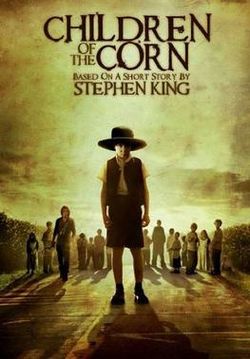
Movie: Children of the Corn (2009)


Let us take a moment to sort out the vast Corn franchise. The original short story appeared in Penthouse in 1977, to the delight of those select few who were reading for the stories. A year later it was anthologized into Night Shift. Seven years later it broke out on to the big screen, the first of many movies from Night Shift to receive the movie treatment. In the 1990's no less than five sequels were cranked out, all straight to video except for 1992's Children of the Corn II: The Final Sacrifice, which proved yet again a proud tradition of horror franchises that using the word "final" did not mean anything of the kind. Even bringing back Isaac (played by then 40-year-old John Franklin) couldn't reverse the sagging fortunes of the franchise and it seemed that 2001's Children of the Corn: Revelation (the seventh time around) marked the end of the road.

Enter SyFy, the network that proudly serves up big heaps of Sharknado movies every weekend, to bring Children of the Corn back to life in 2009 with a complete reboot. I'm not sure if this was the reboot America was crying out for, but it happened and I watched it.

The 2009 version is part of a larger trend in Stephen King movies to be more faithful to the source material. Especially in the case of short stories, where the sin of padding instead of cutting occurs, this would seem like a welcome development. Unfortunately, the result is a much more boring movie. If you loved the original short story, watching this will make you think you've already read the shooting script, as, for the most part, they play things very close to it. Vicky and Burt bicker, they get killed by the children, and the fateful decision to lower the death-ceremony age to 18 is played out.

On one hand this version is surprising in that it keeps the action in the mid-1970's, meaning the production team decided to keep everything relatively period-specific in terms of fashions and cars and so forth. They could have copped out and just made it present day. On the other hand, they are so obsessed at driving that point home that they added a bunch of padding about Burt struggling with his tour of duty in Vietnam that gradually overwhelms the entire narrative. They also make an executive decision to make Vicky African-American, casting Kandyse McClure in the role. Faithful readers of this blog may remember her as black Sue Snell in the 2002 Carrie, while everyone else knows her as Dee from the re-imagined Battlestar Galactica. She never really bothered me in those shows, but here she is generally obnoxious, more so than Vicky was in the story, plus throughout she is wearing a yellow dress the size of a large cocktail napkin. Not exactly the gear you want to sport to battle the Old Testament kids.

A big change in this version is that the kids are much younger. While the 1984 movie, for example, cast a 25 year old man as 13 year old Isaac, this one goes the other direction, casting a nine year old that bore a strange resemblance to Joe, the little kid from Modern Family. Even if  you can get around the fact they probably cast him too young, it gets pretty clear the actor was being forced to utter a bunch of Old Testament prophecy that made no sense to him.

Finally the producers decided it was necessary to show how the children of the corn made...uh...more children of the corn. I guess I could have filled in those blanks on my own, but apparently the creepy death ritual performed on the 19 year olds doesn't shock (or titillate?) modern audiences. I guess the 1980's were a more innocent time after all.

Wednesday, May 24, 2017

Movie: Children of the Corn (1984)


Although the page-to-screen time was a little lengthy, the Children of the Corn movie franchise is now up to nine, with a tenth on the way! Needless to say, I'm going to limit myself to two, this one and the 2009 TV remake (which I am already aware is awful), otherwise I may be stuck here for a good long while.

Like a lot of the Night Shift screen adaptations, it was hard to see how one would stretch Children of the Corn into a 90-plus minute feature film. Like observed with Maximum Overdrive and anticipated with all the rest, extra padding of the story plot was needed. Whereas the story drops a bickering couple into a mystery, the movie portrays a mostly-loving couple (though Peter Horton stops things short of wedding bells) entering a situation we the viewers already know is going to be dangerous thanks to the helpful flashback tacked on to the beginning. While the flashback is certainly educational, it sucks the Twilight Zone feel out and replaces it with stock "don't go in there!" horror tropes.

Also in the padding department is the development of the child characters. In the book, they are mostly just a bunch of Old Testament names and all corrupted. In the movie, Malachi is propped up as the diabolical one, Isaac as the clear leader (yet flawed and overthrown), and the brother and sister Job and Sarah, who are salvageable and are, in fact, rescued by the heroic couple (and in all fairness Linda Hamilton was about to become Sarah Connor, so it only makes sense they will save the day). This is quite a turn from the story, where the couple is flat out killed in the cornfield.

Finally, maybe because there was special-effects money to burn, the movie posits that there is some creature along the lines of the Tremors monster that is making all the kids do these things. Again, this serves to make the mysterious scary and sets a different tone from the story. Obviously what seemed like a nuclear detonation in the cornfield didn't stop this creature permanently, otherwise we wouldn't have the five direct-to-video sequels. Or maybe some other shenanigans take place later on. This all goes past my concern, though.

As I mentioned, there was a little more lag in page-to-screen between the appearance of the short story in Night Shift and the release of the movie. The first three novels all received adaptations four years or earlier from their book date of release. Children of the Corn was the first of numerous movies spawned from Night Shift, but took over six years to make it (add another year if calculating from the story's first appearance in Penthouse). After this, however, it would be a torrent of mediocre to outright-awful movies being barfed out almost annually.

Here's a weird factoid to leave you with. John Franklin, who played 12 year old Isaac, was 25 years old when the movie was released. I guess this makes him the white Emmanuel Lewis, but it should also give great hope to aspiring actors who look very young for their age!

Sunday, May 14, 2017

Movie: Maximum Overdrive (1986)


My theory that the worst movies are the most frequently shown on television was absolutely crushed, when, of the entire smorgasbord of Night Shift adaptations, only Maximum Overdrive was readily available. In the interest of full disclosure, I've seen parts of this movie, as it seems to always be on one premium channel or another, but I've never actually intentionally sat down to watch it from start to finish. There is such a high amount amount of unnecessary profanity I can only imagine how this would have played on network television, especially the cursing ATM and marquee at the beginning.

According to the library listings at stephenking.com, Maximum Overdrive was the twelfth Stephen King movie to be made (unless you don't count Creepshow, and then it's number 11). This means, by 1986, the "Stephen King Movie" genre had really started to settle in, which isn't necessarily a good thing if you're holding out for Oscar nominees. Just to be extra special, Maximum Overdrive is directed by Stephen King himself, right at the height of his coked-out phase. The result is nothing short of craptacular.

It's hard to know where to even begin with a critique of this movie. It was only the second movie (following the still-warm Children of the Corn) to be based entirely on one short story. Therein lies part of the problem. Whereas a novel-based movie must slash, a short story-based movie has to pad. The source material, "Trucks" really doesn't offer enough to go feature-length, although I contend it would have fit nicely into a Twilight Zone episode (maybe one of the one-hour versions). So, in comes the padding. Extra characters abound, and, of course, an explanation about what is causing the machines to go haywire. Apparently a comet's tail can cause many (but not all) machines to malfunction. Trucks are the most impacted, becoming almost sentient, while smaller appliances just misbehave. And electricity isn't a requirement, as sprinklers also malfunction. Don't worry about regular cars, though. They are unaffected, although one can't rule out a freak car window rolling up unexpectedly and trapping your hand (complete with massive diamond ring), causing you to despair and die.

I digress, but clearly there are some inconsistencies here. From reading some secondary material, I suppose the intention of the film was to be "good-bad" so that people would appreciate that it is actually a clever movie that makes fun of other scary movies. Unfortunately, though the thick lens of cocaine, it came out more "bad-bad" - ridiculous is some ways, and just boring in others. Perhaps the whole "standoff at a truck stop in North Carolina that just happens to sit on a huge cache of weapons" plot line didn't work for me. The cast in general hovered somewhere between dislikable and forgettable, and lead man Emilio Estevez didn't have a lot to say, even it was because he spoke to trucks. Pat Hingle, who we met in the Shining remake, is here as a gun crazy, fast-drawling chauvinist station manager, who makes firing rocket launchers look surprisingly easy, almost like he modified a toy to shoot actual missiles. One fringe benefit of bad movies like this one is catching an actor or two before they were really famous. In this case, look sharp for Marla Maples (playing "Woman #2") and Giancarlo "Gus Fring" Esposito as an ill-fated video game enthusiast. Do they make the movie worth watching, though? No. Maybe better to watch a Breaking Bad marathon. At least Esposito has some lines in that!

To be clear, this was a bona fide bomb. I have gained some understanding that a lot of Stephen King material from the mid and late 1980's, both page and screen-based, are not particularly top notch, and probably reflected the bad place King was in mentally and physically. It should be acknowledged however, that these works can also be comfort food of a sort, if it reaches one in the right state of mind at the right time. Therefore, I wouldn't necessarily say this is a movie that never should have been made, but there is a time and a place for these things, and I just wasn't there in either sense. Perhaps it will be (or was) different for you.

Tuesday, May 9, 2017

Night Shift (1978)


For this post, which will probably be shorter than the ones on his first three novels, I'll be discussing more "big picture" concepts about the collection rather than delving into individual story details. More by accident than design, that kind of thing can be found in the previous post.

Believe it or not, one part of this project I was looking forward to was tackling the volumes of collected short stories by Stephen King. Some have, for better or worse, become part of the pop culture fabric of the last half century. However, as was evident with Night Shift, that wasn't a fully-formed development. All great writers take time to find their voice, and King is no exception (and we can argue elsewhere about the "great" label!).

If I had approached this in the strictest chronological order possible, about half of these stories would have kicked off the project, beginning with "Strawberry Spring" from 1968. I think some of the later collections might have thrown in some early stories as well, but my mind isn't there yet. To make matters even more confusing, the publication data provided in the back of the book masks a couple of the stories, "Strawberry Spring" and "Night Surf", which were originally published in Ubris, a student literary magazine, but are given the later dates (1975 and 1974 respectively) of their publication in Cavalier, presumably in slightly reworked form.

The stories are laid out in publication order, but not strictly so. Given that 'Salem's Lot was still pretty fresh in 1978, the temptation to kick things off with a "previously unpublished" story related to that universe was probably overwhelming. Most of the stories published prior to the publication of Carrie fall in the first half of the book and exhibit the developing author. From "Sometimes They Come Back" onward, the stories are those of an author with one well-known novel on the market and in general are more solidly written. The last few stories are either originals, or published outside the men's magazine market, showing King's growing appeal on the mass market.

King was a pretty regular contributor to Cavalier, and just over half of the stories in this book appeared in their pages. Two were published in Penthouse and one in Gallery, which means those few people that read these magazines for the stories were richly rewarded, or at least provided a more believable cover story for what that pile of magazines was doing under their bed. Writing forty years in the future, it seems pretty crazy that he would publish in men's magazines best known for their photos, but it really shines a light on the author King was perceived to be in the 1970's. This is very pre-Green Mile and still a couple years in front of the time in which anyone would suspect a director like Stanley Kubrick would take an interest in adapting one of his novels. You go where the money is, I suppose!

As I've alluded to, Night Shift would provide the fodder for no less than ten movies, six to the big screen and four TV adaptations, and this does not take into account the gazillion sequels and remakes of said movies. Short stories are more tempting to adapt, I think, because you don't need to cut out stuff to make it fit into a feature length running time. However, sometimes you need to pad, and that's where the problems begin. I'll gradually explore some, if not all of these, as I can find them, and appropriately bemoan all their faults. Stay tuned for the most prevalent and ghastly of the bunch...Maximum Overdrive.

Sunday, April 16, 2017

In Progress: Night Shift

For this one I'll go story by story rather than the usual random page numbers. Since there are twenty stories, this should make for a reasonably long post when completed, unlike Rage. As is frequently the case, this post may be rife with spoilers as it is updated, so consider yourself warned!

"Jerusalem's Lot": Stephen King had been dancing around with the idea of writing something in the epistolary format, and it finally happens here. We saw a little bit of it in Carrie (through not the whole way through), while with 'Salem's Lot he mentions the influence of Dracula and its epistolary format, yet writes his vampire book as a straight narrative. It is tempting to call this a prequel to its shortened-namesake novel, but there is very little holding the two together and some major differences that would make a same-universe situation hard to explain. For instance, the notorious haunted houses have different names, and everything feels much closer to the ocean than the novel. Although this is one of just four of these stories to be original to this collection, I get the feeling the original notion for this story predates 'Salem's Lot and was "fleshed out" for publication here. As for the epistolary format, it is also arranged into Russian nesting dolls, which quotations within quotations within quotations. And if that isn't enough, the last piece effectively wraps itself around the entire story...and drops a pesky "unreliable narrator" on us!

"Graveyard Shift": This is one of the first short stories by Stephen King to appear in a professional magazine. As noted in my journey through the early novels, his style was still developing. While there is a little bit of primal thrill in finding out just what the heck is in the "sub-basement" of this disgusting mill, the whole story is primary a gross-out festival. So of course they based a movie on it, which should be a delight to watch. I'm still confused about how eager Hall was to let the critters kill his boss, and yet just a few paragraphs down said critters take him out as well. It was a touch of the "blind cruelty" that marred Rage, but, hey, this is the early stuff.

"Night Surf": A proto-Stand short story, originally published in 1969 and re-published professionally in 1974. I'm not sure if King adjusted the original, either in 1974 or for publication here, but if not it means the seeds for what would become his magnum opus had been in place for quite some time. If I hadn't known this I probably would have written this one off as largely forgettable. As is the case with his earliest writings, the main character, Bernie, is a total jerk, which doesn't help.

"I Am the Doorway": King did a little science fiction here, but don't worry, he manages to make it properly horrifying in a hand-destroying ending. I am hesitant to call him an optimist, but when it came to the space program, he was predicting Mars landings and Venus fly-bys before 1980. But was it worth it to bring home a bunch of alien eyes?!

"The Mangler": Gee, and I thought I'd have to wait until "Trucks" to get a good possessed-machine story. In spite of a heavy reliance on gross-out descriptions of people getting attacked or eaten by a rogue machine (in the case an industrial laundry ironing machine), there is a good story here, which makes it the standout in King's pre-Carrie literary output thus far.

"The Boogeyman": This is more dialogue-driven piece, all taking place within the confines of a shrink's office. Unlike pretty much all the previous stories, this one has no section breaks, which on one hand keeps the story moving fluidly, but on the other it doesn't allow any good stopping points if you are just trying to sneak in a few pages. The reveal felt very Twilight Zone-ish. I suppose that isn't a strike against it.

"Grey Matter": This may be the grossest one yet. Nothing like drinking a bad can of beer and slowing transforming into a contagious (?) gelatinous mass. Good times! Nevertheless, the story had a good flow and suspense. Like many of the stories, the end was abrupt, but I've come to accept that is the nature of a short story in the horror genre.

"Battleground": This one was probably my favorite yet. It's as if the Small Soldiers script got a seriously dark reworking by King. I was a little tired when I started it, so I though "oh great a boring hitman story from the early days", but all of that got thrown sideways when the main character started being attacked by toy soldiers. Again, I think this one owes a good deal to the Twilight Zone, because these tiny guys are very good at what they do...and they have a little help in the form of bonus items.

"Trucks": Here it is, the inspiration for the greatest movie ever, Maximum Overdrive. That is a post I'm looking forward to. Things obviously are a little more condensed here. In some ways this is better, because the story doesn't feel any obligation to "explain" (lamesplain?) why trucks are taking over the world. They just are. The enslavement of the human race isn't a matter of if, but when. Indeed, the whole scenario is pretty far-fetched. I mean, it's all told from the perspective of a random truck stop in Anywhere, USA. But do we read Stephen King because of his realism?

"Sometimes They Come Back": It's the story that launched the hit TV-movie franchise! This is one of the longer stories here and was published just around the time Carrie hit bookstores. I'm trying to save the "big picture" analysis for the next post, but in the first half of the story it is clear that King's writing has matured from the "Graveyard Shift" days. The main character is very sympathetic and clearly drawn from King's own challenges of family and career. Of course, nothing is at it seems, and around the final ten pages the whole thing dissolves into a crazy satanic ritual that seemed completely detached from the rest of the story and left the door wide open for still yet more weirdness. Why do hands have it so rough in this book?!

"Strawberry Spring": This is another one of King's early stories, originally published in 1968 and republished professionally in 1975. Having done time in Southern California, I know all about Indian Summers and the Santa Ana winds that accompany them and tend to make people crazy and set the hills on fire. Strawberry Springs are their counterpart on the flip side of the year, and yes, it makes one particular person very restless. I've said too much.

"The Ledge": This is one of the two stories adapted into the movie Cat's Eye. From what I've seen and heard, Cat's Eye is probably going to be the best of the movie adaptations from Night Shift. Anyway, the premise is kind of absurd, making a wager (bet?) that the main character will not be able to circumvent a tall building on its tiny top-floor ledge. However, that's the fun of it. Then you realize that both characters are actually pretty awful people and nobody means what they say. Classic King!

"The Lawnmower Man": What a gross story. It's bad enough to envision of fat naked man mowing a lawn (in more than one way), but the vivid descriptions of the poor animals who get in the way of said lawn-mowing man? Yuck. I would actually be more concerned about watching the movie if it even borrowed one iota more than the title only.

"Quitters, Inc.": The other part of Cat's Eye, and one of the more imaginative stories here, this one will really make you think about what lengths one might go to kick a habit. As with "The Ledge", the premise is bonkers, that some company will watch your every move and physically harm your family if, god forbid, a cigarette touches your lips. Again, that's the fun! I almost winced when he thought he could get away with it, just the one time, somewhere he thought he couldn't be seen.

"I Know What You Need": The sole story in this collection that was published in Cosmopolitan of all places, is one of the strongest of the set. Like many of the later-published stories, there is a little more tenderness than in the earlier stories. But don't worry, there is plenty of hair-raising moments at the end. Remember, nothing is as good as it seems.

"Children of the Corn": Somehow this story managed to spawn something like nine movies, most of middling quality. The story itself is at the same time horrifying and a bit of a shrug. The couple that has the honor of strutting into this Twilight Zone scenario is thoroughly dislikable, harkening back to the older stories. The last part of the story takes a pretty hard turn away from the usual Night Gallery fare, as let's just say the kids aren't going to let these schmoes report them to the wider world.

"The Last Rung on the Ladder": This is the second of the three "previously unpublished" stories in Night Shift. While "Jerusalem's Lot" was an epistolary exercise by King, this one and the last one (see below) I think are more reflective of where King wanted to be with his writing at that point in time, or at least in some label-free future. There isn't an overt supernatural moment in the story, which is actually kind of nice after "Children of the Corn".

"The Man Who Loved Flowers": Just when you thought it was all tender Stephen King until the end of the book, we get this wacko short piece, I think the shortest of the entire book. In this case, the tenderness is all a trick. This guy is psycho.

"One More for the Road": This is a sort of "farewell" to the 'Salem's Lot universe, I suppose, even though I know the Dark Tower books will try to tie everything together. For God's sake people, just stay away from that town. It's for the vampires now. This story probably spews out the most Maine place names, so it should be surprising that it was published in Maine magazine!

"The Woman in the Room": As with "Last Rung on the Ladder", King brings Night Shift to a close with a tender and bittersweet tale of loss. Whereas the other story was about youth, this one is about death. I can't help but think this story emerged from the author's own struggles with losing a parent. However, I hope he didn't reach the point where he needed to take matters into his own hands.

Whew! That's twenty tales for you!

Friday, March 31, 2017

All the movies that come from Night Shift

I've been bogged down in a bunch of other reading, so Night Shift is still waiting in the wings, but I can promise there will be forward progress next month. This update is just to whet your appetite for mostly bad movies. After three versions of Carrie and two each of The Shining and 'Salem's Lot (and mercifully none for Rage), I'm hoping I've received enough of an inoculation to withstand what lies ahead. Night Shift would ultimately yield a bonanza of ten movies, six theatrical and four for television. None of them are anywhere near the level of Kubrick, but many enjoy a high degree of notoriety. The more ill-advised ones may be a little hard to track down, and I was clear in my opening manifesto that I won't spend large amounts of money to read or watch something. So without further ado, here is the Murderer's Row of Movies, with Rotten Tomatoes scores as of March 2017:

Children of the Corn (1984) - 38%
Cat's Eye (1985) - 69%
Maximum Overdrive (1986) - 17%
Graveyard Shift (1990) - 13%
Sometimes They Come Back (1991, TV) - 50% audience score
Lawnmower Man (1992) - 38%, and yes I know it has zero relationship to the short story
The Mangler (1996) - 27%
Trucks (1997, TV) - 30% audience score
Battleground (2006, TV) - an episode of Nightmares & Dreamscapes, with a 7.9/10 rating on IMDb
Children of the Corn (2009, TV) - 17% audience score

If you are a fan of the "How Did This Get Made" podcast, then I'm sure you will find the upcoming posts for these fine adaptations at the very least amusing.

Monday, February 27, 2017

King on the art of short stories

As we prepare to read Night Shift, the first story collection published by Stephen King, here's some advice from the Master of Horror himself: